

 12:00 pm - 9:00 pm
  Village Office, 456 Main St Aurora, NY 13026
Cayuga County
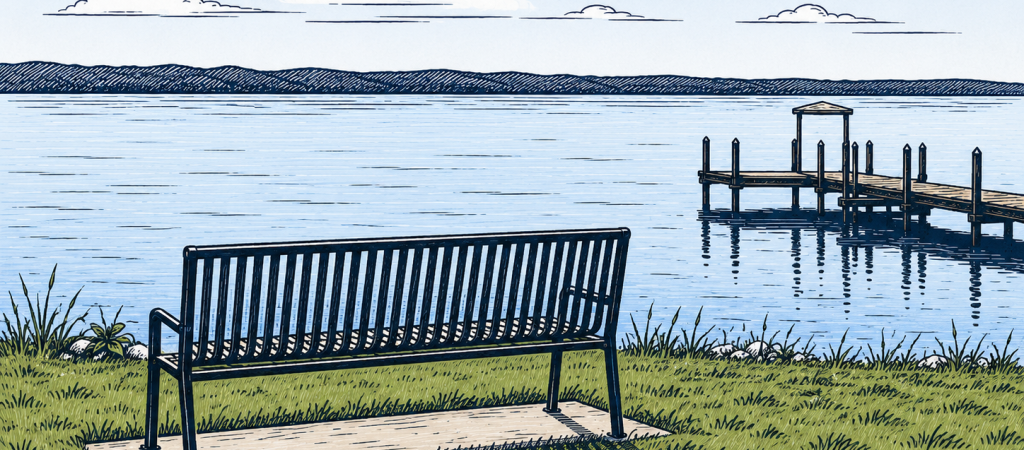
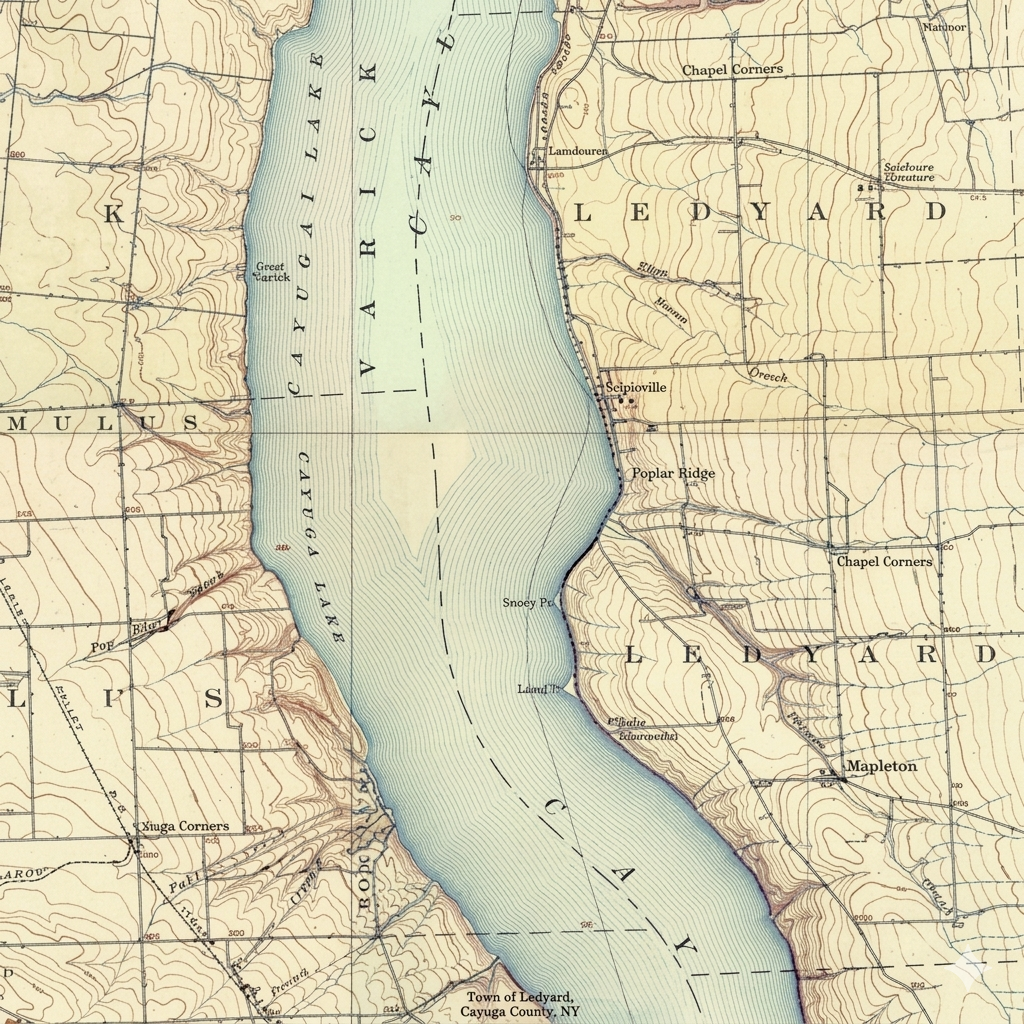
Cayuga Lake is the longest of the Finger Lakes of Central New York. Since the withdrawal of the glaciers, the lake has provided abundant sustenance to human communities on and near its shores, from Paleo-Indian hunters to the Cayuga people of the Haudenosaunee, a Confederacy of six Native nations.
The Cayugas’ main and larger villages were east and southeast of Union Springs; however, the special topography of Aurora’s bay led them to establish peach and apple orchards here, along with a smaller village, Chonodote (“Peachtown”), possibly in the seventeenth century.
The American Revolution
The American Revolution caused a serious rift in the Confederacy. Only the Oneidas and Tuscaroras sided with the Americans; the Seneca, Mohawk, and Onondaga nations remained allied to the British. Although the Cayuga nation did not formally ally with either side, some Cayuga warriors joined the Seneca in British military actions on the American frontier.
In 1779, in the midst of the Revolutionary War (1775-1783), Gen. George Washington sent Gen. John Sullivan on a scorched-earth campaign through Central New York, with the main action against the Seneca and Cayuga as well as Loyalists in the region. The villages destroyed included Chonodote, with its orchard of 1500 peach trees, and the Cayuga fled to Fort Niagara.
Although the Cayuga were allotted a reservation on their historic lands (including part of Aurora) following the war, this dispersal led to fairly rapid sale under treaties that remain disputed.
The Aurora Historical Society
Farmers Market at Patrick Tavern
Visit Village of Aurora Historical Society for information on online ordering. To pick up your order, come to the parking lot behind Patrick Tavern, across Main St. from St. Patrick’s Church in Aurora between 4:30-5:30 p.m. on Tuesdays. Your orders will be ready to go, and safe market procedures will be in place. Visit the Aurora Historical Society Facebook page for details.
Aurora Historical Society News
Please visit the Village of Aurora Historical Society’s Facebook page here

Village Historian
Dr. Linda Schwab is the Village Historian, serving the public by answering queries, working with the Village Archives, assisting with preservation issues, and presenting local history in a variety of ways.
She can be contacted directly at:
315-246-1130 or
315-364-7293 (through the Village Clerk )
New Settlements
Euro-American settlement of Aurora began in 1789, and increased dramatically with the apportionment of land to veterans of the Revolution. Those who settled in Lot 34 of the Military Tract – today’s Aurora – were from New England and Pennsylvania.
The unique climate afforded by Aurora’s bay built rapid wealth from the land; lake shipping thrived. Known first as Scipio, the village was named Aurora in 1795 and incorporated under that name in 1837.
It was the first county seat and the site of the first county court as well as a distinguished school, Cayuga Academy (later Cayuga Lake Academy) founded in 1799. An early (1819) and intact example of Masonic construction and iconography remains in Scipio Lodge #110.
The completion of the Erie Canal made Aurora a bustling transport site for wool, grain, fruit, and pigs from the village and its environs to the Erie Canal, and thence to national and world markets; the Aurora Inn (1833) and former Morgan Office Building (1834; today The Fargo) represent this era.
Growth
This rapid growth offered opportunity in the 1840s and 1850s. African-Americans freedom-seekers joined freedmen and women who were already a significant part of the local community; skilled Irish stonemasons and carpenters were in great demand.
Henry Wells, of the Wells Fargo Express Company, came to Aurora in 1852 and founded Wells College for women in 1868. These developments remain visible in Aurora’s built environment, from the Dutch-framed Patrick Tavern (1793, oldest building in Aurora and probably in Cayuga County) and early Federal homes to elegant Italianate and Queen Anne houses, as well as more modest nineteenth-century homes reflecting Aurora’s working heritage.
Three brick and stone churches (two remaining active in their original buildings) designed by the same architect, Samuel D. Mandell, in three different styles (Romanesque, English, and Gothic) were built 1860-1874.
National Recognition
Beginning in 1973, for the nation’s Bicentennial, Aurora residents worked hard to achieve national recognition for the Village and its history. In 1976 the entire village was placed on the National Register of Historic Places, and several buildings were given national landmark status.
The dual Village of Aurora/Wells College National Historic District remains a significant draw to tourists and, for its residents, a prized example of now-rare village life. This page reflects the village’s ongoing commitment not only to preserve the past but to understand it.
Aurora Then and Now
In 2011, the local history class at Southern Cayuga High School, taught by Barbara Casper, spent a term researching historic buildings in the village that are significant for their architectural features, their ownership, their usage, or the changes that have befallen them.
In the process the students consulted a number of archives and local residents, gaining an appreciation for historical research and for the public and private interest that has allowed the village to maintain its historic character. We applaud their hard work, diligence, and enthusiasm